
The brief
Buckle Consult is an AI-driven product engineering consultancy selling into enterprise buyers — healthcare, fintech, agriculture, nonprofits. Their old site wasn’t pulling its weight: the brand didn’t match the room they were trying to walk into, and the site wasn’t ranking for the searches their buyers actually ran.
The brief was a rebrand plus an SEO-first rebuild — a site that would look credible next to much bigger names, be fully crawlable, and hand content ownership to Buckle’s team so they could publish without touching code.
What we built
A marketing site structured for SEO, not just for humans
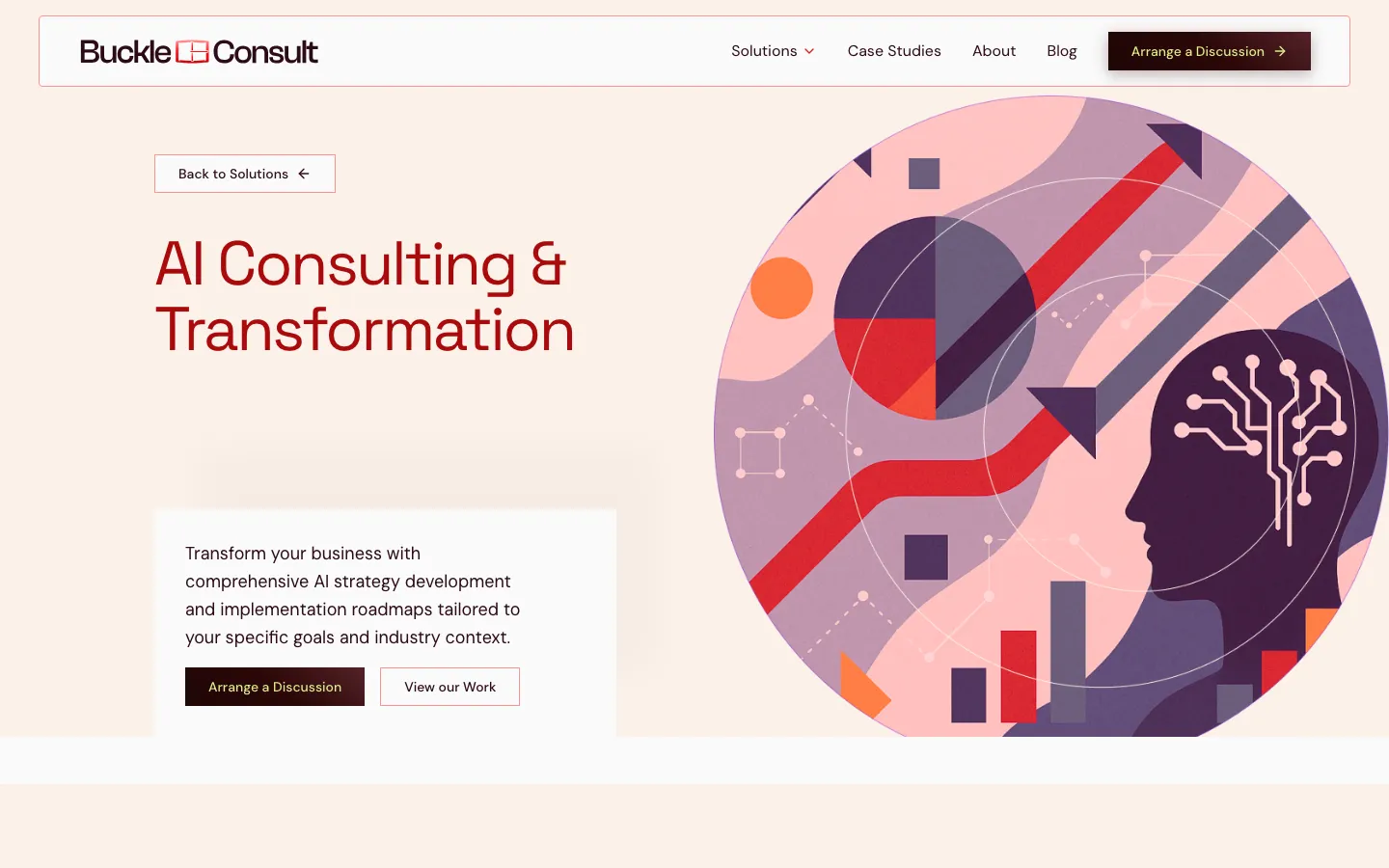
Next.js 16 on the App Router with server-side rendering throughout, so Google’s crawler gets fully-populated HTML on first response — no JavaScript hydration required to see the content. The four solution lines (AI Consulting, Product Engineering, Data & Analytics, Cloud Services) each get a dedicated page with tailored metadata, schema, and internal linking — the kind of structure search engines reward and a single-page site can’t offer.
A CMS Buckle’s team actually owns
Sanity Studio embedded inside the Next.js app at /studio. The blog (categories, authors, individual posts) and case studies both run off Sanity schemas we designed around Buckle’s editorial workflow. A revalidation webhook triggers Next.js incremental static regeneration the moment content is published — no rebuild, no redeploy, edits go live within seconds. Buckle’s team publishes on their own schedule without a developer in the loop.
Self-hosted infra that matches their compliance story
Buckle sells to buyers who read SOC 2 reports. Sitting a public-facing site on a managed platform like Vercel would have been a mismatch — so we containerized the Next.js app with Docker, fronted it with an Nginx reverse proxy, and deployed to their own EC2 instance with Let’s Encrypt for TLS. They own the box, the certificates, and the logs. Docker-compose files exist for local dev, staging, and production — the same image is promoted across environments.
The brand in motion, without the weight
Framer Motion drives the entry transitions and scroll-linked animations that give the site its enterprise-grade feel. Tailwind keeps the CSS payload small; Next.js’s image optimization keeps the hero art crisp at any viewport. The contact form uses Resend for transactional delivery — fast, inbox-safe, and zero maintenance.
Integrations, not reinventions
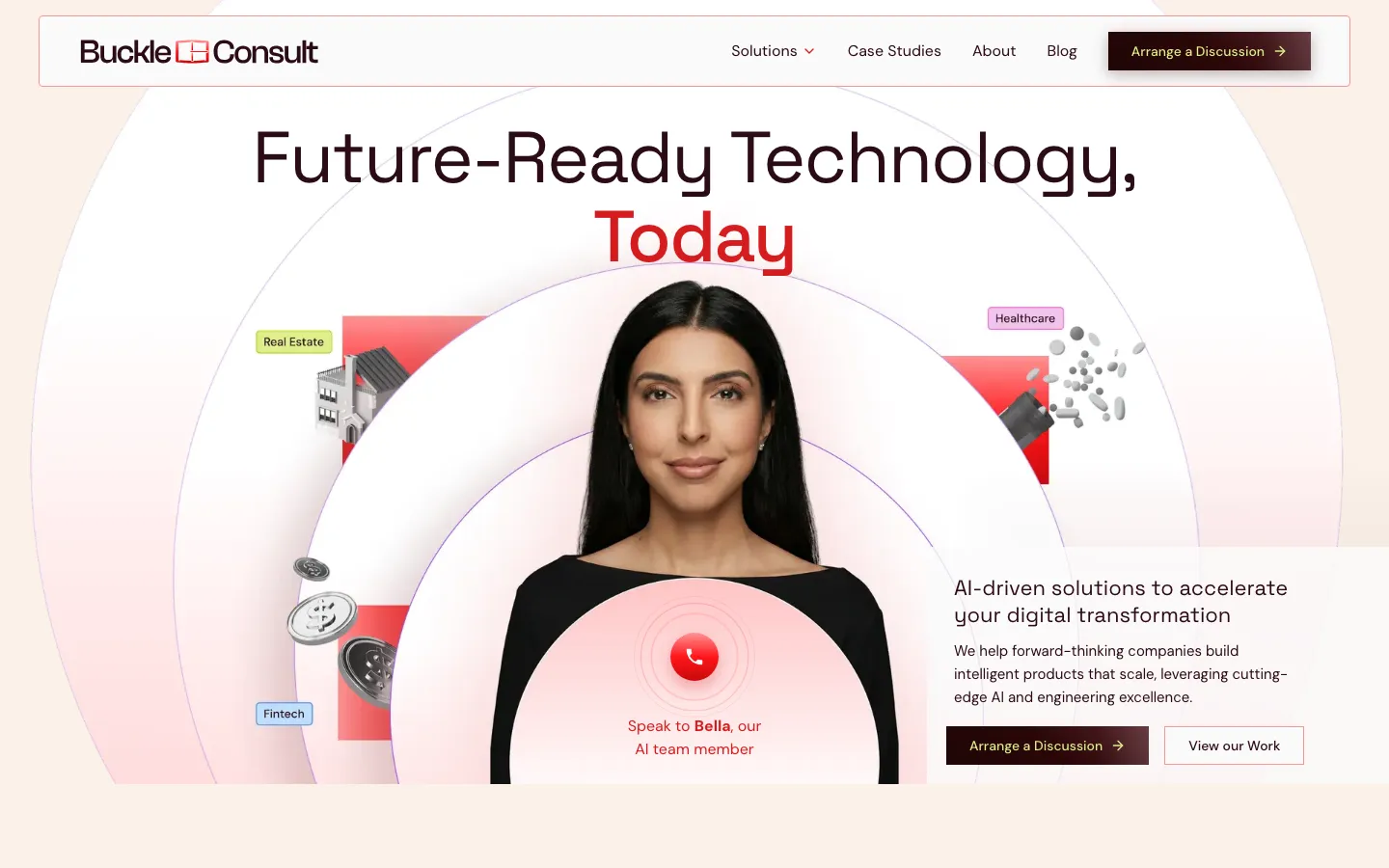
“Bella,” the AI team member who greets visitors on the home page, is a third-party chat widget embedded into the site — not something we rebuilt. The goal was to make the integration feel native to the brand, not to reinvent chat.
How we approached it
- SEO as an architecture decision, not a plugin. Every page renders on the server. Every solution page has its own URL, title, description, and schema. Internal linking was mapped before components were built. The site was fast and crawlable on day one — not something retrofitted before launch.
- Editorial workflow before visual design. We modeled the Sanity schemas (blog post, author, category, case study) against the way Buckle’s marketing team actually wanted to publish — then built the components that would render them. It meant fewer “how do I add a pull quote?” conversations after handoff.
- Own-the-infra deployment. Docker + Nginx + EC2 + Let’s Encrypt is more work than clicking Deploy on Vercel, but it means Buckle’s public-facing site lives on infrastructure their compliance team can point to. For a vendor whose home page lists ISO 27001 and SOC 2 Type II, that’s not a detail.
The team
A delivery manager, a senior engineer, and a junior engineer from MakaraTech.